When Do You Actually Need a New Mold? (And When You're Being Overcharged)
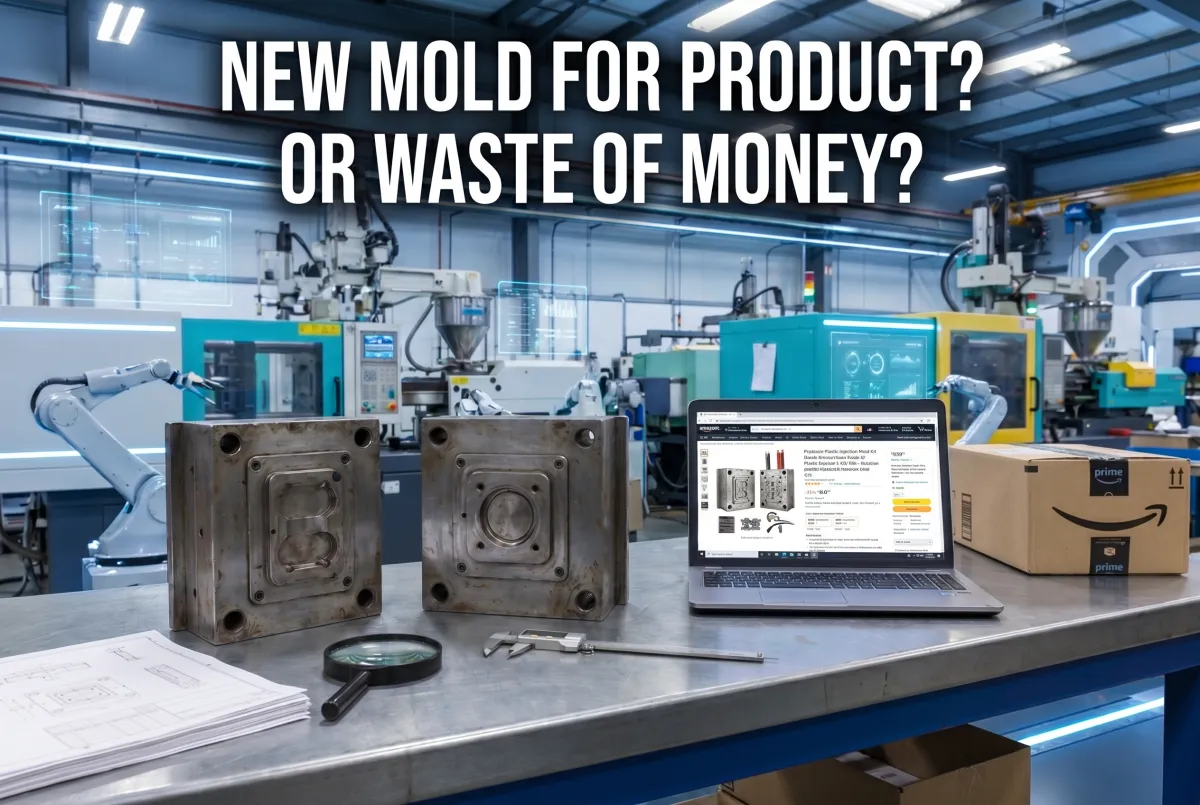
If you've ever gotten a quote from an overseas manufacturer, you've probably seen it: a mold fee sitting somewhere between $500 and $3,000, listed like it's just part of the process. Sometimes it is. Most of the time, especially for first-time sellers, it isn't.
New molds are one of the most common ways early-stage Amazon sellers overspend before they've validated a single thing — and one of the easiest costs to avoid when you know what you're doing.
What is a mold fee, actually?
A mold fee (or tooling fee) is what a manufacturer charges to create a custom production tool that shapes your product. If you want a unique shape, a proprietary component, or a design that doesn't exist in their current lineup, a new mold makes sense. But here's what most sellers don't realize: manufacturers already have existing molds — sometimes dozens of them — and many of those molds can produce a product that's close enough to what you need to get started.
Requesting a new mold before you've tested demand is like paying for a custom restaurant kitchen before you know if anyone wants to eat your food.
Start with what the manufacturer already has
The technique we teach our students is simple but powerful: before you ask for anything custom, ask the manufacturer to send you samples of what they can already produce. Get as close to your target product as possible using their existing tooling, materials, and configurations.
This does three things for you. It dramatically lowers your upfront cost. It gets a real product in your hands faster. And it gives you something tangible to test with real buyers — without a significant financial commitment attached.
You'd be surprised how often an existing sample, with minor adjustments to color, packaging, or labeling, is more than good enough to validate demand and start generating sales.
The three situations where a new mold is actually worth it
Not every mold request is a manufacturer trying to overcharge you. There are legitimate cases where investing in custom tooling makes sense — and knowing the difference is what separates smart sourcing from expensive guesswork.
A new mold is worth considering when demand is already proven. If you've run a small test batch, gotten real customer feedback, and sales are moving consistently, you now have the data to justify a custom investment. You're not guessing anymore.
A new mold makes sense when you're testing a genuinely competitive feature. If there's a specific design or functional improvement that you believe will meaningfully differentiate your product (and you have the budget to absorb the risk) custom tooling can give you an edge that's hard to copy. Just make sure the feature is grounded in customer feedback, not personal preference.
A new mold is the right call when you've validated the market and you're ready to scale. At this point, custom tooling isn't a risk. It's an investment in a product you already know sells.
If you don't fit one of these three situations, push back on the mold fee. Ask what existing tooling they have. Ask for samples first. A good manufacturer will work with you. One who insists on a new mold before showing you what they already have may be padding the quote.
How to have the conversation with your manufacturer
You don't have to be confrontational, just direct. A simple framing that works well:
"Before we discuss custom tooling, can you send me samples of existing products that are closest to our spec? We want to evaluate fit and quality before committing to any mold investment."
This signals that you're an informed buyer, not a first-timer who'll accept whatever gets quoted. It also opens the door to a much more collaborative sourcing conversation.
Use our free workbook to validate before you invest in tooling
Before you're anywhere near the mold conversation, the most important step is making sure your product idea is worth pursuing at all. Our free Product Validation Workbook walks you through the exact process we use to confirm real demand before a single dollar goes toward manufacturing — so that by the time tooling comes up, you already know you're building something that sells.
[Download the free workbook here.
Want the full sourcing playbook? That's inside our group program.
Our group program covers the complete end-to-end process — from product validation to supplier negotiation to knowing exactly when (and when not) to invest in custom manufacturing. It's the system our students use to reach a 90% success rate on their product launches, and it's built around one principle: prove demand first, then invest.
If you're serious about sourcing smart and scaling without unnecessary risk, this is where it all comes together.